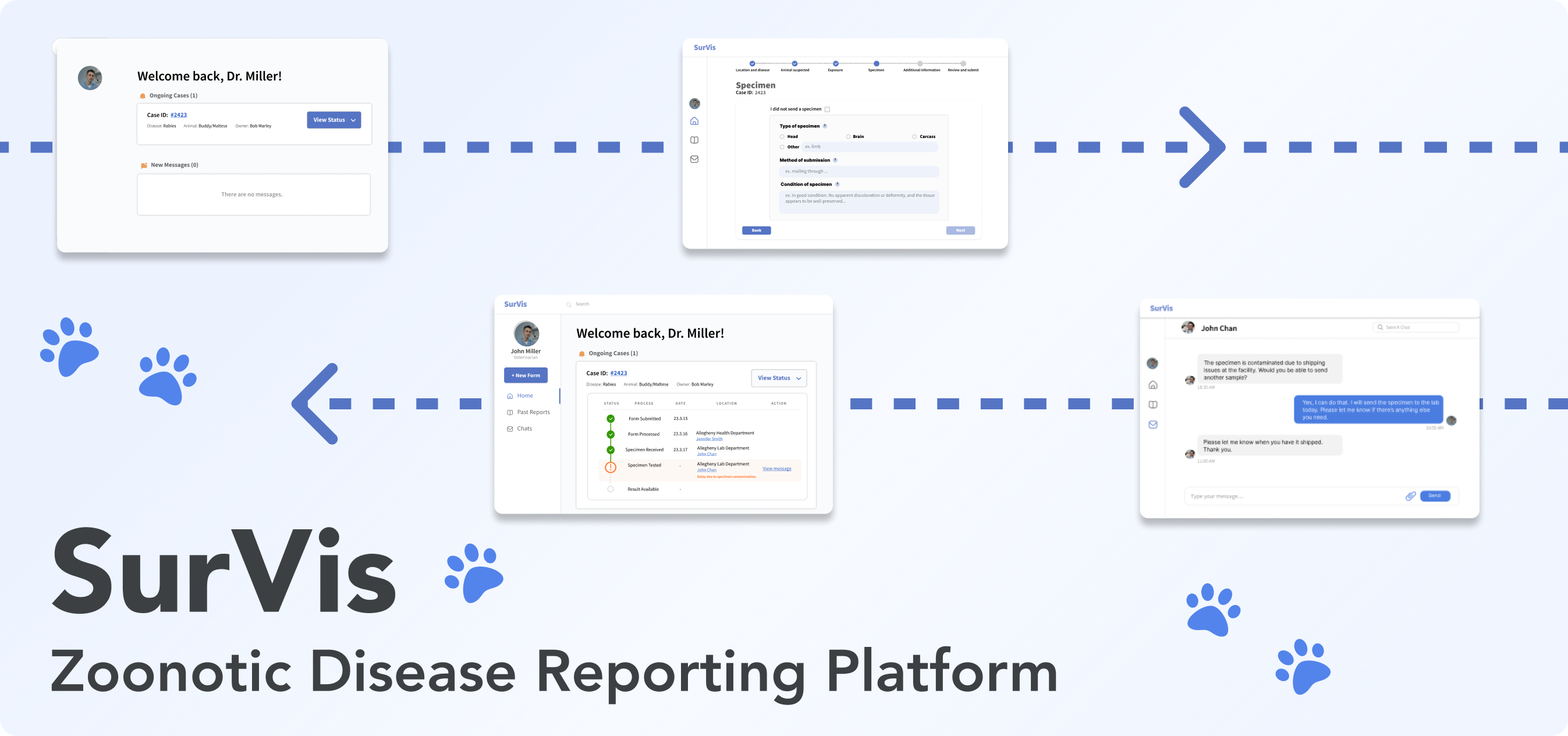
Health officials advocate for a One Health approach to improve collaboration and information sharing in the medical ecosystem, addressing delays in reporting zoonotic diseases like COVID-19.
Our team investigated this, focusing on creating a digital platform to help vets efficiently report and track these diseases. We developed a centralized portal to enhance reporting and communication between vets and health officials.

Goal
We strive to contribute to the One Health approach by enabling real-time information sharing between all stakeholders to reduce the scale of zoonotic outbreaks. Our overarching goal of this project is to reduce delays in early stage reporting of zoonotic diseases in order for stakeholders to more quickly identify and address potential outbreaks.
We aim to develop a solution that bridges the animal health service system and the public health system, and address the following prevalent questions:
Process
Research
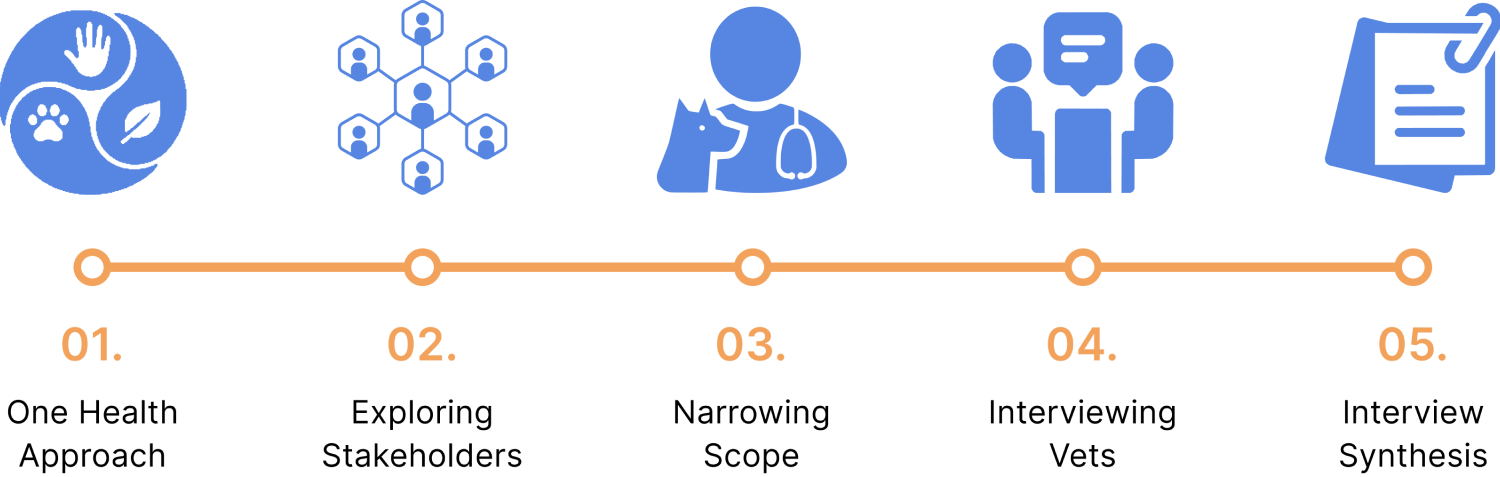
To better understand the One Health approach, how infectious disease reporting is currently handled, and identify flaws with current zoonotic disease reporting, we conducted online research to find relevant papers for literature review.
Boston University Medical Center
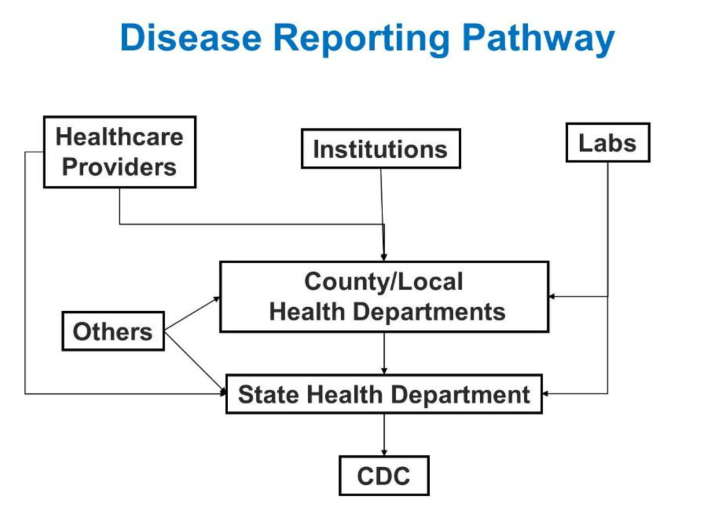
For instance, from the chart to the right, you can view the disease
reporting pathway in Massachusetts and most other states.
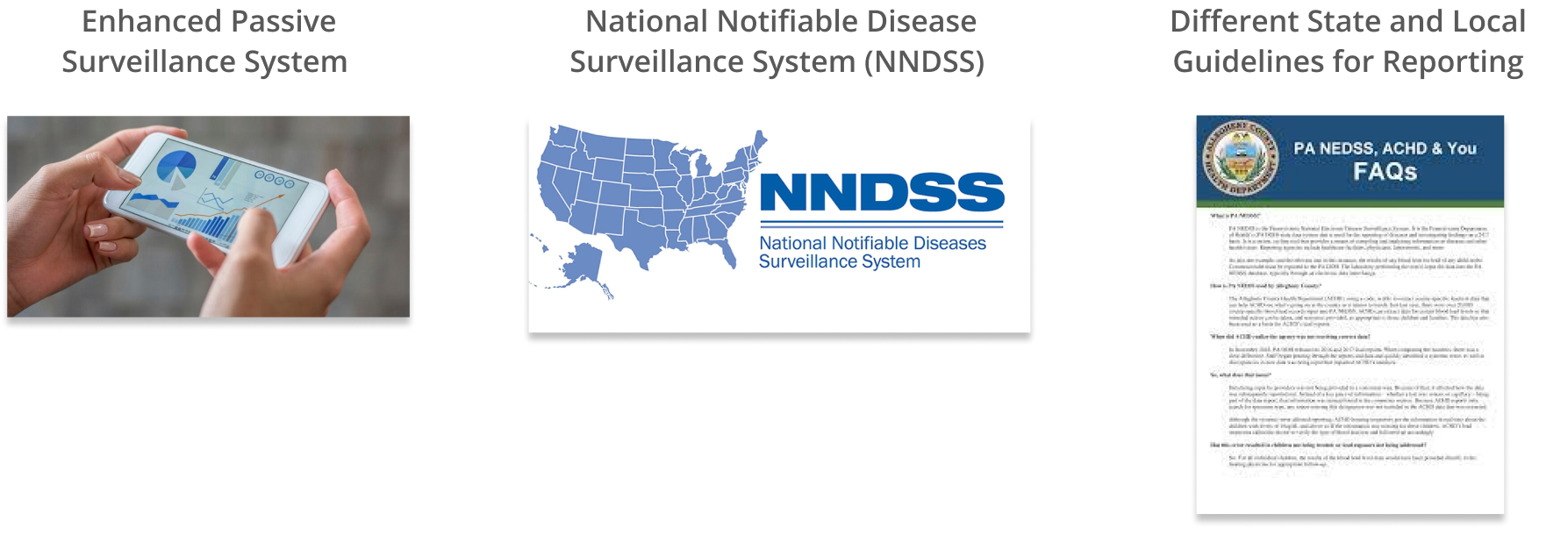
Overall, there is currently no up-to-date application to allow the common person nor a veterinarian to quickly and easily report zoonotic diseases. All resources out there for official disease reporting is managed by the government, and the government only provides limited information on disease data.
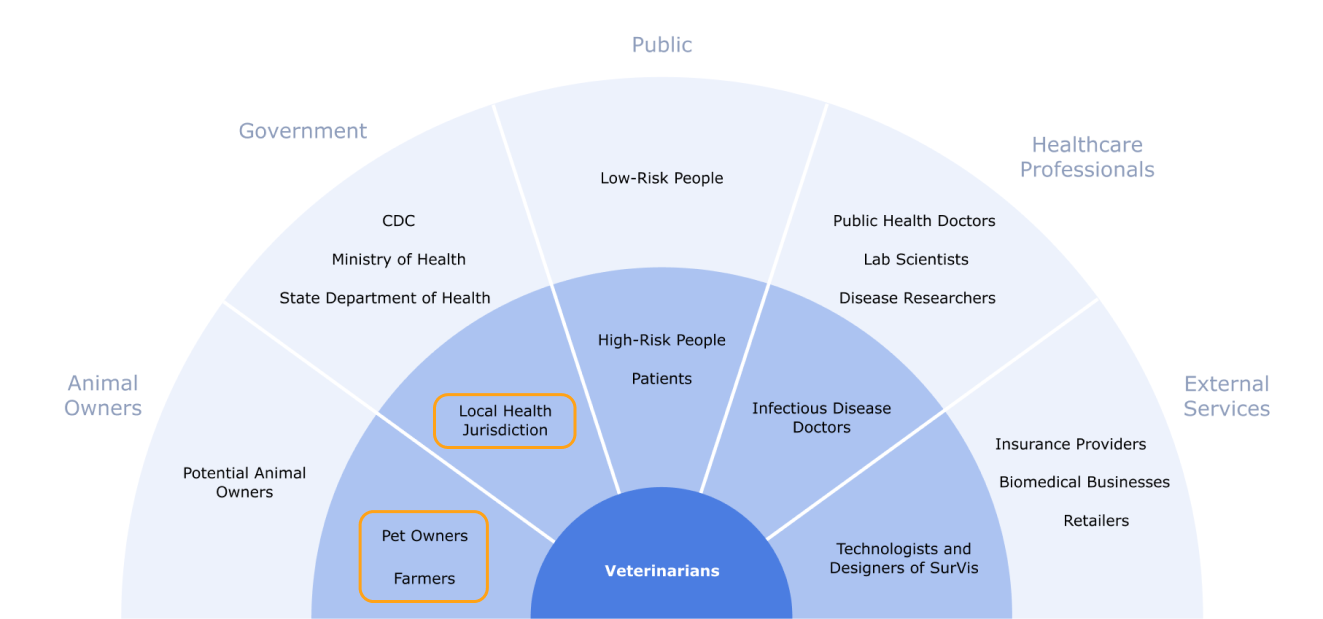
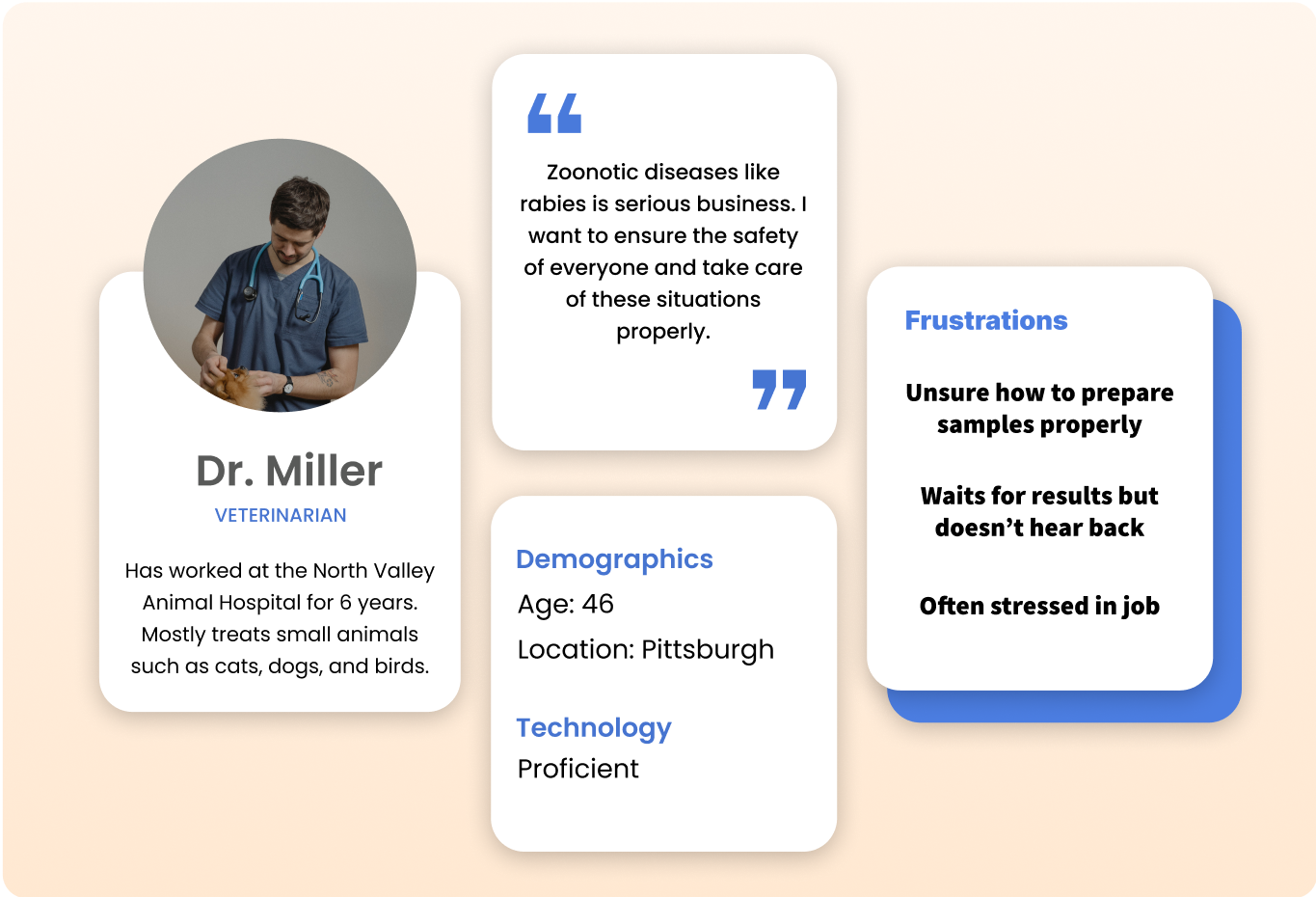
We have identified numerous stakeholders surrounding the veterinarians. Our findings from both primary and secondary research have led us to bring especially more attention to the animal owners and government officials, who are the most directly related to the reporting of veterinarians. They are also the people that would be able to provide any further collected data or insights into the disease cases that the vets are working on.
Semi-structured Interviews
We conducted semi-structured interviews with four stakeholders that could give us a better understanding of the disease reporting process and the challenges they face in this time-sensitive process.
01. Veterinary Public Hygiene Specialist
02. Professor of Virology
03. Animal Training Professional
04. Veterinarians
Directed Storytelling
For each stakeholder, we conducted 30 min interviews using directed storytelling to extract personal accounts from their experience. We mainly focused on asking about the connections between stakeholders and the inefficiencies that the current system has.
Synthesis
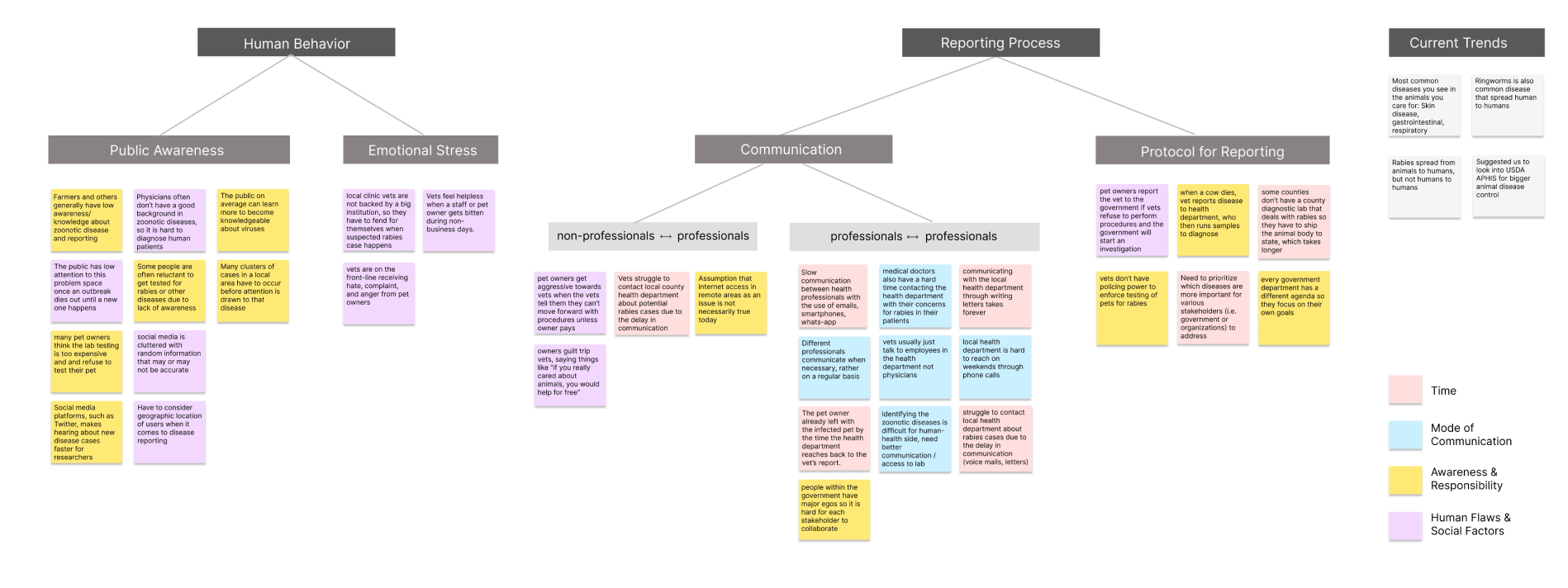
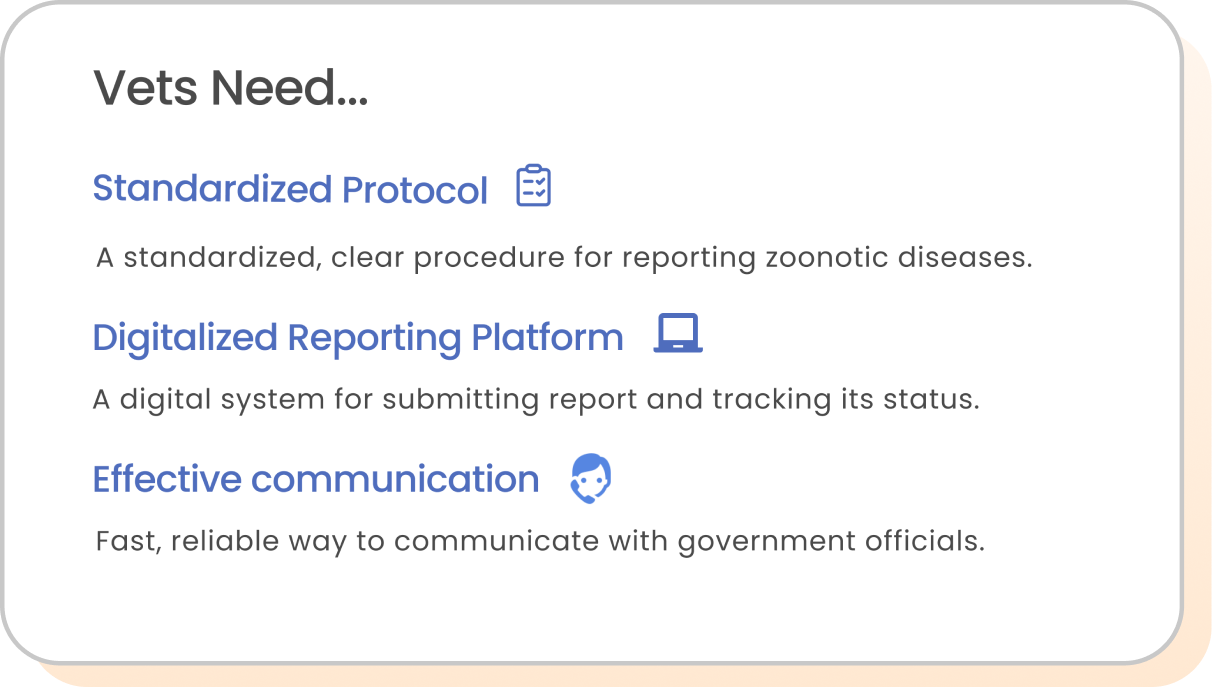
We synthesized the stakeholder interviews with an affinity diagram to identify relationships and common pain points, given the number of stakeholders and the scope of problem we were facing. We identified the key problems in the zoonotic disease reporting process:
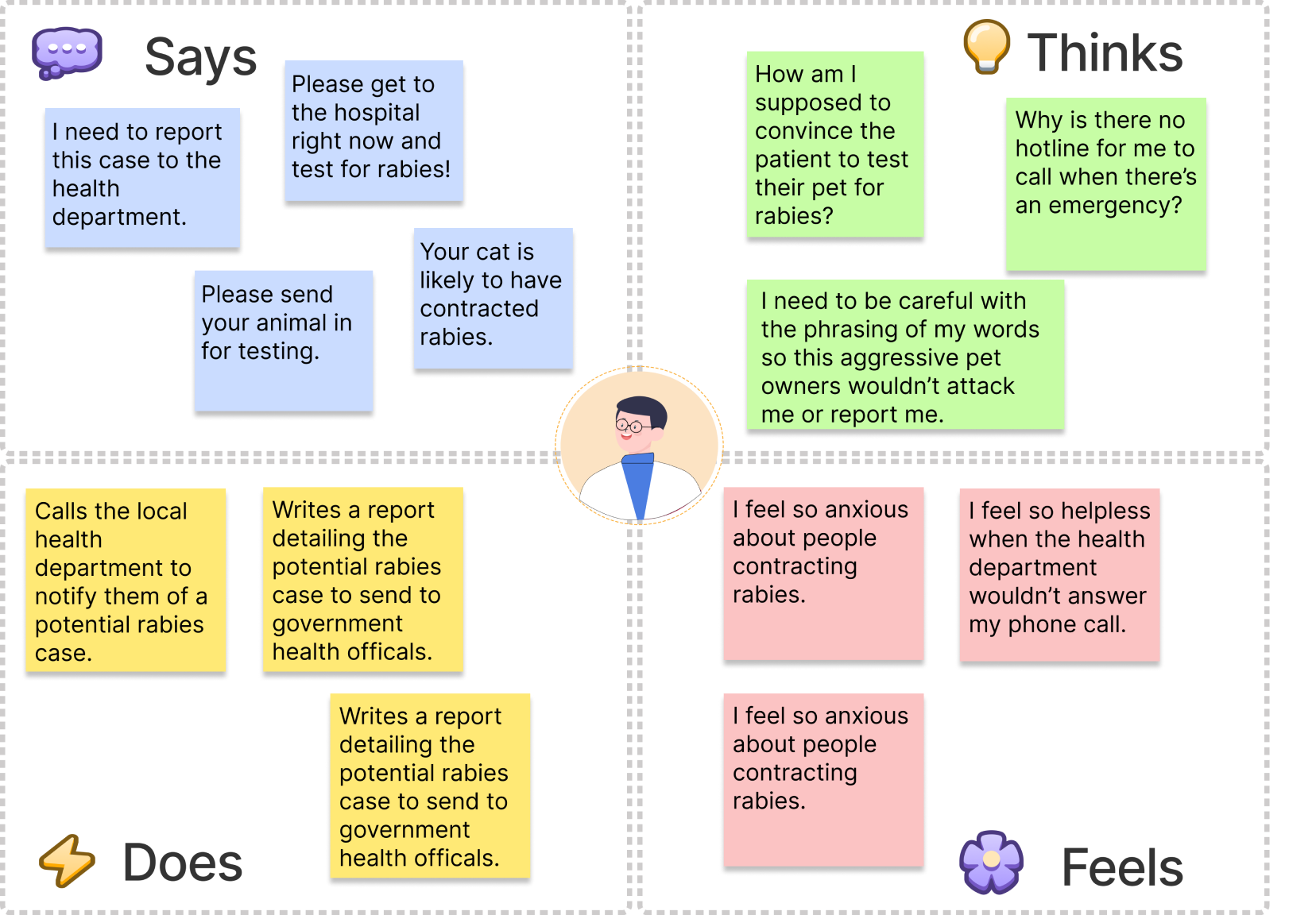
We realized that vets' motions and experience is a crucial part of the problem we are trying to solve, so we decided to create an empathy map that would illustrate the vets' struggles based on the interviews we conducted.
How might we help veterinarians better communicate and follow up with the local health department throughout the zoonotic disease reporting process?
Ideation
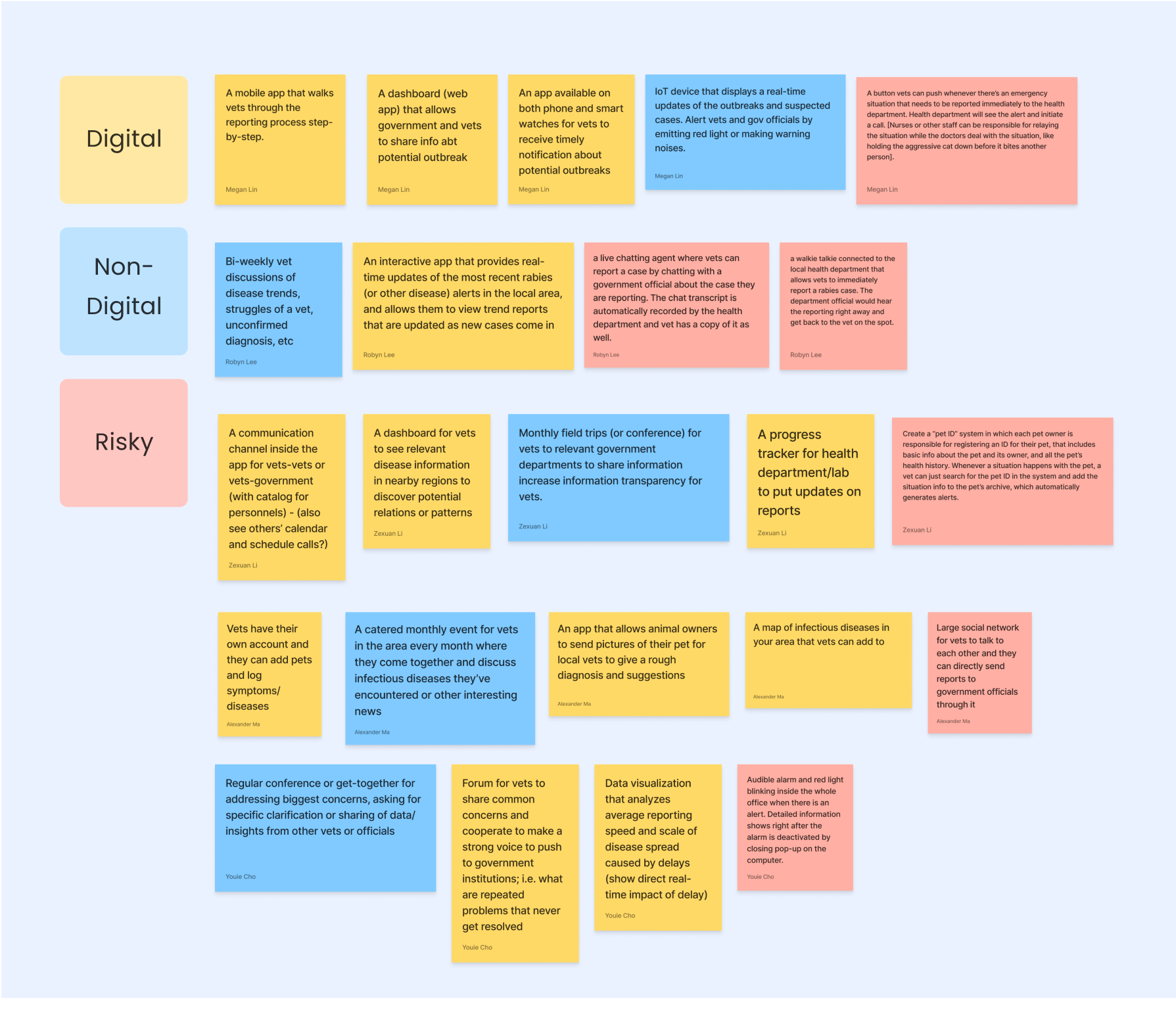
We used Crazy 8s to brainstorm solutions to answer our "how might we" design question. We explored digital solutions, non-digital solutions, and riskier options with more unorthodox ideas.
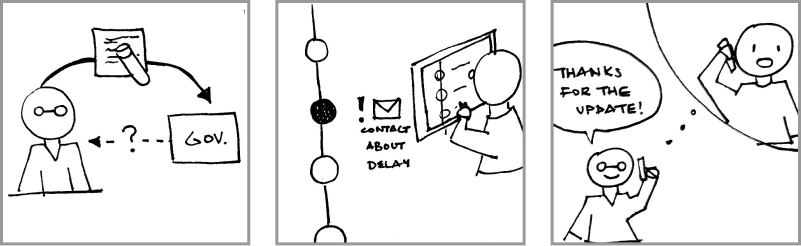
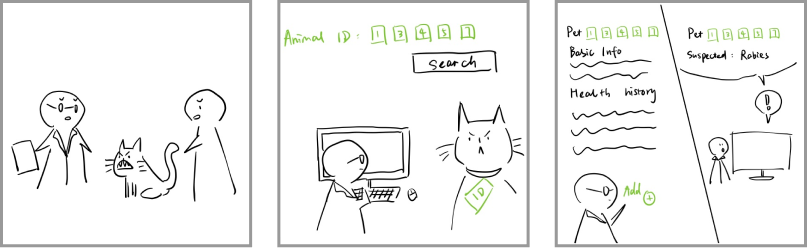
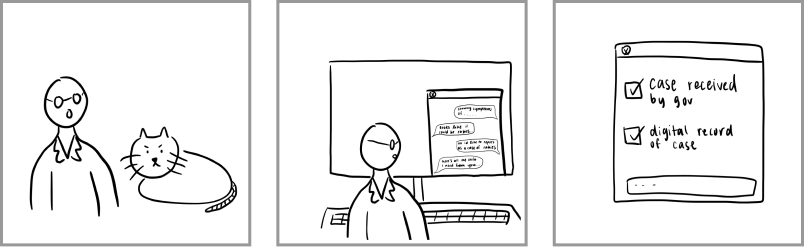
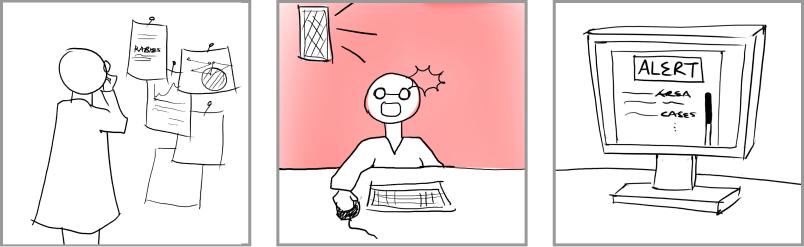
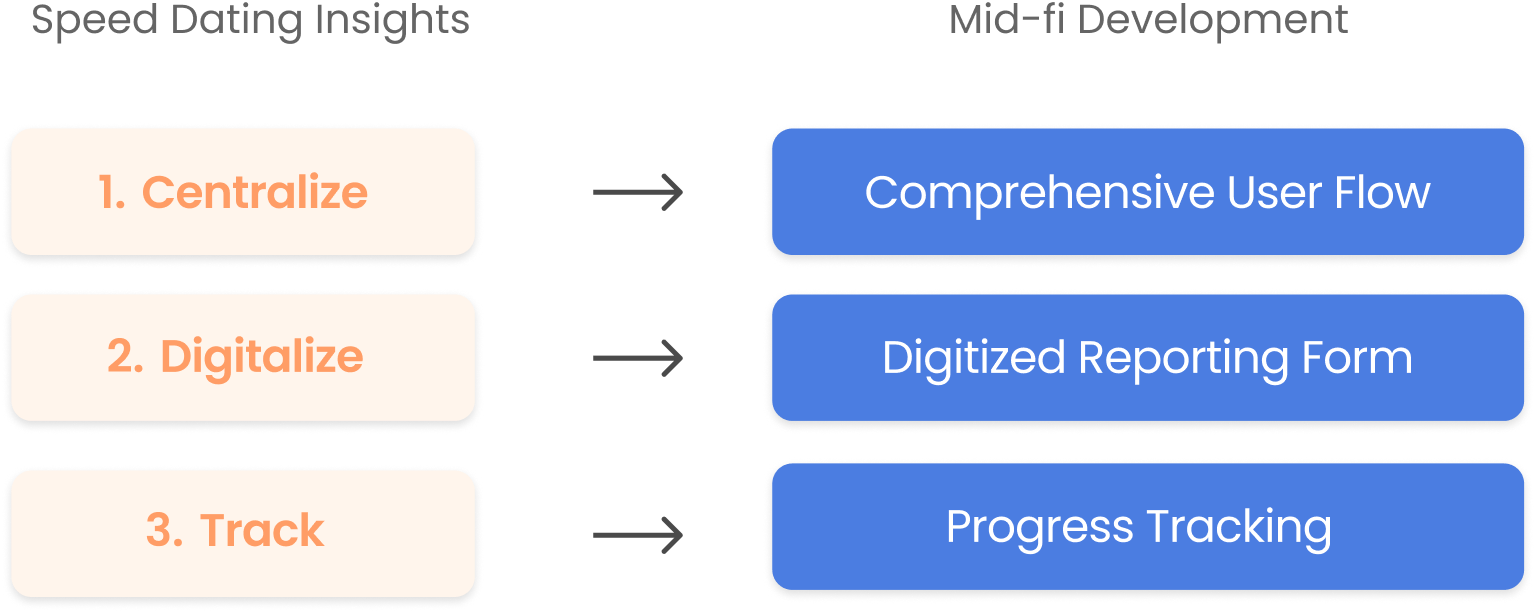
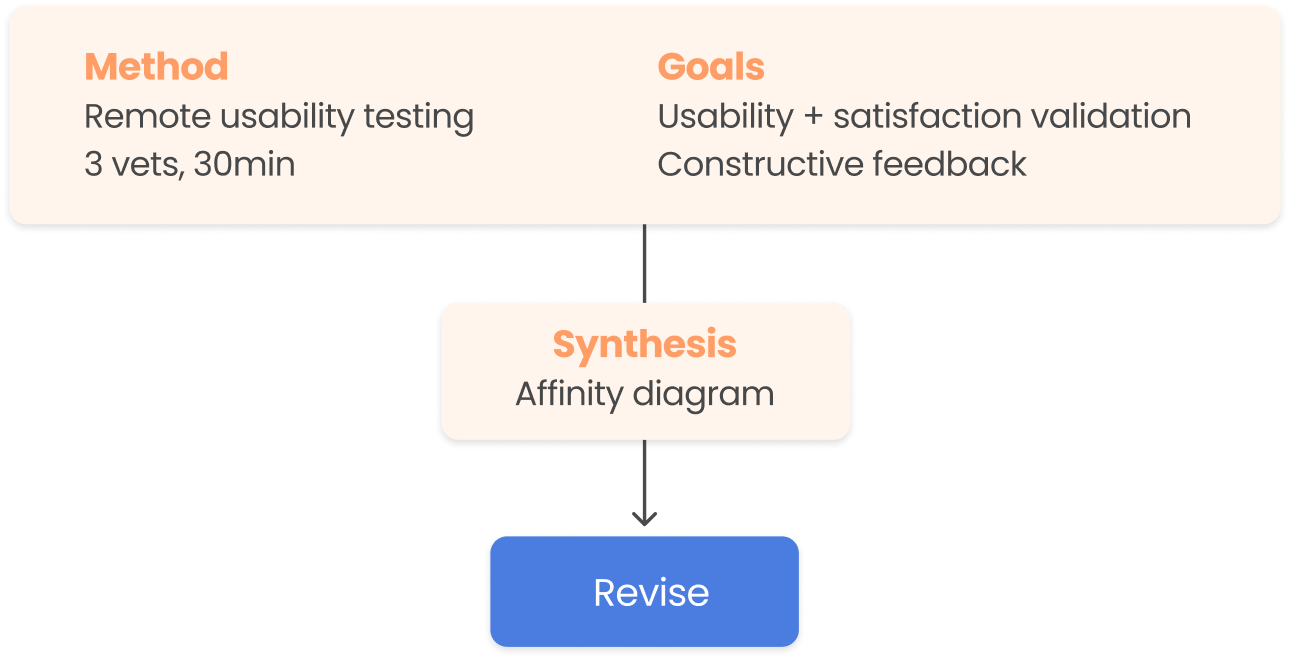
We then developed the key solutions into 8 storyboards to concisely visualize how they would change a current state towards a more ideal state. We conducted speed dating with 3 professional veterinarians narrow down our solution with on their feedback.
We identified our key stories with constructive feedback:
1. Centralized Reporting and Tracking
"At a clinic, the vets don't hear back so a follow up would be appreciated."
2. Pet ID Database with Medical Records
"We need an online reporting system that shows disease, pet owner info, and vaccination info."
3. Live Recorded Chat with Government Official
"Anything that makes reporting cases digital is helpful."
4. Blaring Alarm for Disease Alerting
"Not necessary. More subtle notification with relevant updates would be enough."
Design
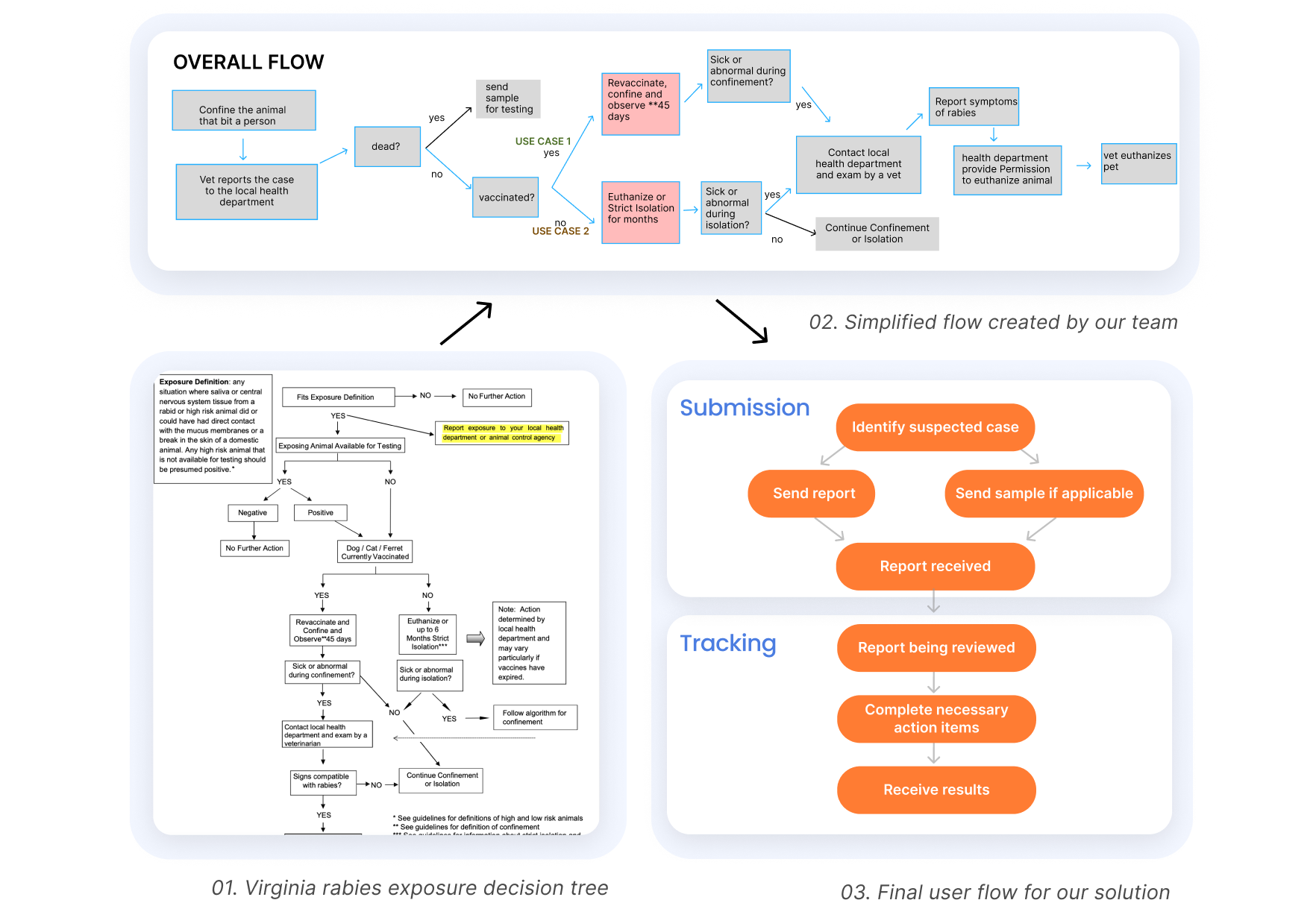
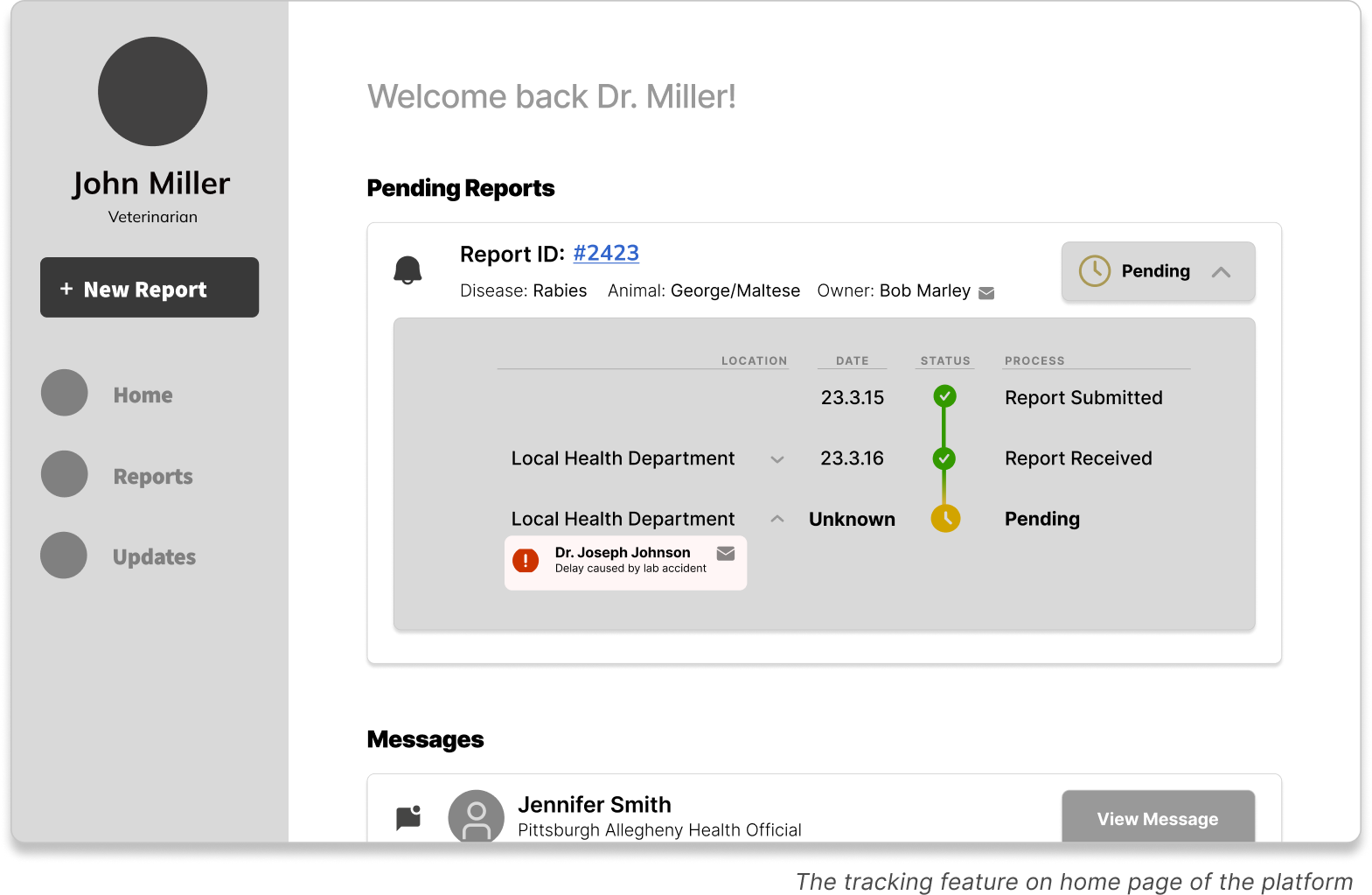
We extracted the key steps in the current complex process of reporting rabies, and simplified the user flow into two main parts—report submission and tracking—making it easier and more efficient for vets.
Testing
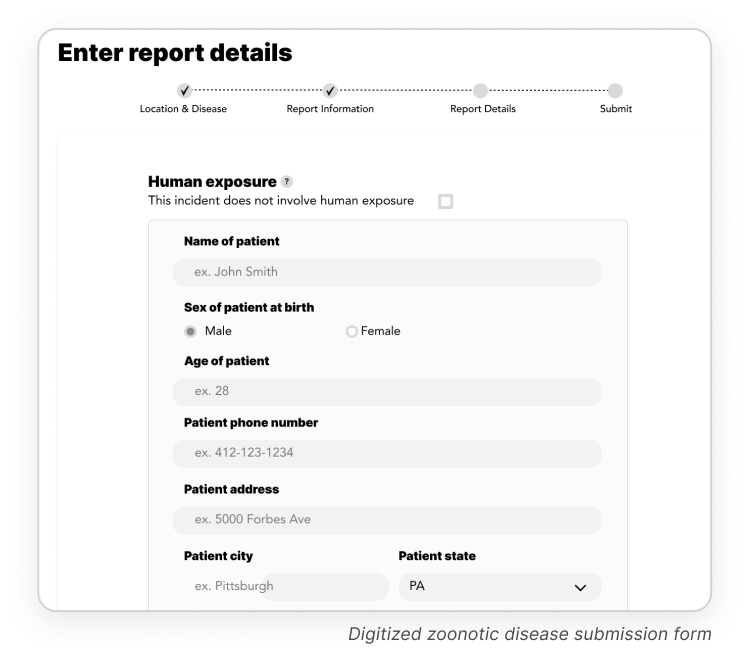
Final Design